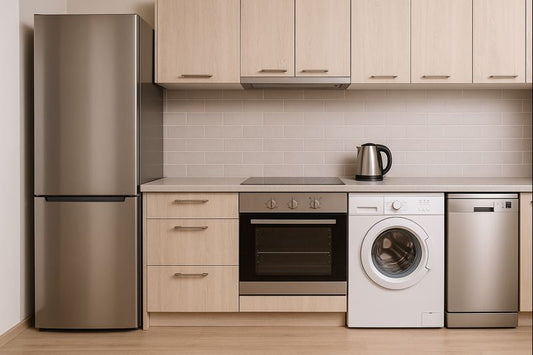
Top 10 Energy-Efficient Kitchen Appliances to Cut Your Electricity Bill
With UK energy prices rising, many Wirral households are feeling the pinch. Choosing energy-efficient kitchen appliances is a smart way to cut electricity use at home. These modern models do the same jobs as older ones but use far less power – lowering your bills and carbon footprint. Grange Electrical, a trusted Wirral supplier and installer, has seen growing demand for energy-saving appliances as homeowners look for long-term savings. In this article, we present the top 10 energy-efficient kitchen appliances and tips to use them effectively. Upgrading to these appliances, and using them wisely, can make a real difference in your monthly bills.
1. Fridge Freezers
Fridge freezers run all the time, so an efficient model can save a lot of energy. Modern fridges have better insulation and inverter compressors to keep food cold using much less power than older ones. Because they’re always on, fridges and freezers often make up a big part of your electricity use – so upgrading can make an immediate dent in your bill.
Tips for using it efficiently:
-
Set the fridge to about 4°C and the freezer to around -18°C – the ideal temperatures for efficiency and food safety.
-
Minimise opening the door and keep seals tight, so cold air doesn’t escape and waste energy.
-
Defrost the freezer if ice builds up. A thick layer of ice makes the freezer work harder and use more electricity.
2. Dishwashers
Modern dishwashers use less water and lower temperatures to clean dishes, which can be more efficient than hand-washing. An energy-efficient dishwasher (especially on its Eco programme) uses minimal hot water and power by spraying effectively and adjusting to how dirty the dishes are. Used properly, it saves you time and helps trim your electricity usage.
Tips for using it efficiently:
-
Run the dishwasher only when it’s full. One full load uses less energy than two half-empty loads.
-
Use the Eco wash setting whenever possible. These cycles run longer but use much less electricity and water.
-
Skip pre-rinsing under the tap. Just scrape off excess food – modern dishwashers can handle it, and you’ll save the energy that would have heated the rinse water.
3. Washing Machines
Heating water makes washing machines heavy energy users. Modern washers counter this with cooler washes, Eco cycles, and inverter motors that run only as hard as needed. These features drastically cut electricity use compared to older machines. A high spin speed also helps by removing more water from clothes, reducing dryer time later. And choosing the right size machine for your needs avoids wasting energy on half-empty loads.
Tips for using it efficiently:
-
Wash at 30°C or 40°C instead of higher temperatures for most loads. Modern detergents work well at lower temps, and you’ll save a lot of electricity.
-
Wait for a full load before running the machine. Two half loads use more energy (and water) than one full load.
-
Use a high spin cycle (if suitable for the fabrics) when you plan to use a tumble dryer afterwards. The drier the clothes come out, the less work the dryer has to do.
4. Tumble Dryers (Heat Pump Dryers)
Dryers are notorious energy hogs, but heat pump dryers use roughly half the electricity of older types by recycling heat at lower temperatures. They cost more upfront but have much lower running costs (often A+ energy rated). If you dry clothes often, a heat pump dryer can pay off. Look for sensor drying that stops when clothes are dry, and choose a drum size that fits your typical load to avoid wasting energy.
Tips for using it efficiently:
-
Air-dry laundry on a line or rack whenever possible. Even the most efficient dryer uses more electricity than drying for free in fresh air.
-
If you do use a dryer, run the washing machine’s spin cycle on high first. The more water extracted by spinning, the less the dryer has to remove.
-
Use low-heat or Eco settings if available. Drying will take a bit longer at lower heat, but it uses significantly less energy and is gentler on fabrics.
5. Electric Ovens
Electric ovens use a lot of power, but modern ones reduce this with better insulation and fan-assisted cooking. A fan (convection) oven circulates hot air, cooking faster and allowing a lower temperature setting for the same results. When buying, pick an A-rated oven with good seals and insulation. If you usually cook small meals, consider a compact oven or one with split compartments so you don’t heat a huge space for a tiny dish.
Tips for using it efficiently:
-
Avoid opening the oven door too often during cooking. Every peek lets hot air out and forces the oven to heat up again.
-
Use the fan if your oven has one. You can typically set the temperature ~20°C lower and still cook food properly with fan assistance.
-
For small meals or reheating, use a smaller appliance like a microwave, toaster oven, or air fryer instead of the main oven – it will use far less energy for the task.
6. Hobs (Induction Cooktops)
Induction hobs are the most energy-efficient cooktops because they heat pans directly, wasting very little heat. Water boils faster and less electricity is used compared to traditional electric or gas hobs. Induction also offers precise control and features like auto shut-off when no pan is detected, which prevent energy waste. If you have the option, switching to an induction hob can save energy in your cooking.
Tips for using it efficiently:
-
Match the hob ring size to your pan. If the ring or flame is much larger than the pan base, you’re wasting heat and energy.
-
Put lids on pots to trap heat. Liquids will boil faster and food will cook sooner, meaning the hob can be on for less time.
-
Only heat the amount of water you need. Don’t use a giant pot for a small task, and avoid overfilling it – extra water takes extra energy to boil.
7. Microwave Ovens
Microwave ovens are very efficient for cooking small portions or reheating. They use a fraction of the electricity that an oven or hob would need, because they heat the food directly instead of warming the surrounding air. So for tasks like heating leftovers, steaming vegetables, or defrosting, using the microwave can save a lot of time and energy.
Tips for using it efficiently:
-
Cover dishes (with a microwave-safe lid or wrap) and, if possible, cut food into smaller pieces. Food will heat more quickly and evenly, so you can run the microwave for less time.
-
Use the microwave for appropriate tasks – like defrosting food, heating soups and leftovers, or cooking vegetables – instead of using the oven or hob.
-
(And of course, never run a microwave empty, as it wastes energy and can damage the appliance.)
8. Electric Kettles
Electric kettles are more efficient for boiling water than the stove, but you can still waste energy if you’re not careful. It’s best to boil only the amount of water you need each time. Modern kettles help with features like fast boiling, automatic shut-off right when the water boils, and options to heat just one cup or to a specific temperature. If you make lots of brews, using these features and not overfilling the kettle can save a surprising amount of electricity over time.
Tips for using it efficiently:
-
Boil only the amount of water you need. If you’re making two cups of tea, don’t fill the kettle to the top – just use enough for those cups.
-
Use the kettle to boil water for cooking when appropriate. For example, if you need boiling water for pasta, it’s usually faster and more efficient to boil it in the kettle then pour it into the pan, rather than heating water from cold on the hob.
9. Air Fryers
Air fryers cook food quickly and use much less energy than a full-sized oven. Essentially, an air fryer is a small, powerful convection oven that preheats fast and crisps up food efficiently. For small meals or snacks, using an air fryer instead of heating up the big oven can significantly cut your cooking electricity usage.
Tips for using it efficiently:
-
Don’t overcrowd the basket. Leaving some space allows hot air to circulate so food cooks faster and more evenly, which saves energy.
-
Use the air fryer for a variety of cooking tasks, not just chips. Whenever it can do the job instead of your large oven – whether roasting vegetables or reheating leftovers – you’ll be using less energy.
-
(Also remember to keep your air fryer relatively clean; built-up grease can make it less efficient and is a safety hazard.)
10. Slow Cookers and Pressure Cookers (Multi-Cookers)
Slow cookers and pressure cookers are both excellent for energy-efficient cooking. A slow cooker uses very low heat over several hours to make soups, stews, and more — using far less electricity than an oven would for the same result. A pressure cooker does the opposite: it cooks food very quickly using high-pressure steam, which saves energy by dramatically reducing cooking time. Both appliances can cook a family meal with just a fraction of the energy that traditional methods would use.
Tips for using it efficiently:
-
Plan meals where these appliances can replace the oven or stovetop. For example, use the slow cooker for an all-day stew or the pressure cooker for a quick curry – you’ll get the same delicious result with much less energy.
-
In a slow cooker, avoid opening the lid during cooking. Every time you peek, heat escapes and it takes extra energy (and time) to come back up to temperature.
-
(If your slow cooker or multi-cooker has a timer or keep-warm setting, use it to avoid overcooking and wasting energy. And try batch cooking: one big batch uses less energy than several smaller ones!)
Save Energy, Save Money, Reduce Your Carbon Footprint
Upgrading to energy-efficient kitchen appliances – and using them smartly – can have a big impact on your electricity bills. Each appliance we use daily, from the fridge to the kettle, adds up in our overall energy consumption. By choosing models designed for efficiency and adopting good usage habits, UK homeowners can significantly cut their electricity use. This isn’t just about saving money (though you will notice the difference on your bill); it’s also about reducing strain on the power grid and shrinking your household’s carbon footprint. Plus, you get the perks of modern technology – like quieter operation and smart features that make life easier.
For Wirral homeowners, these changes are a practical way to fight rising energy costs. The savings on electricity bills can help pay back the investment in new appliances over time. Grange Electrical, your local Wirral expert, can help you make the switch with helpful advice and professional installation. Investing in energy-saving kitchen appliances means a greener home and a leaner electricity bill. With the appliances and tips above, you’ll be well on your way to a more energy-efficient home.